Your Parents Are Getting Scammed and They Won't Tell You
In 2024, Americans over 60 reported $4.9 billion in fraud losses to the FBI — roughly $33,000 per victim. That's not a typo. And most victims never tell anyone — not their kids, not the bank, not the police.
Why? Shame. They feel stupid. They feel like they should have known better. They're afraid you'll think they can't manage their own affairs anymore. So they stay silent, the money stays gone, and the scammers move on to the next target.
I've talked to families going through this. The pattern is always the same. Here's what's happening, how to spot it, and — most importantly — how to have the conversation without making your parents feel like children.
How Seniors Get Targeted

Scammers target older adults for three reasons: they have savings, they answer the phone, and they grew up in a world where caller ID was trustworthy and your bank wouldn't email you.
1. Phone scams. The most damaging vector. Government impersonation (IRS, Social Security, Medicare), tech support (Microsoft, Apple, "your computer has a virus"), grandparent scams ("Grandma, I'm in trouble"). These work because older adults still answer unknown numbers.
2. Romance scams. Widowed or divorced seniors on dating sites and Facebook. The scammer builds a relationship over weeks or months, then asks for money — medical emergency, plane ticket to visit, investment opportunity. The emotional hook is so strong that victims often refuse to believe it's a scam even when shown evidence.
3. Tech support scams. A popup appears saying the computer is infected. Call this number. The "technician" remote-accesses the computer, "finds" terrifying problems (that don't exist), and charges hundreds for "repairs." Sometimes they install actual malware during the session.
4. Sweepstakes and lottery scams. "You've won!" But you need to pay taxes or fees first. There is no prize. There are only fees you'll never see again.
5. Medicare/health insurance fraud. Fake calls from "Medicare" asking for Social Security numbers to "issue a new card." Medicare doesn't call you asking for your SSN. They already have it.
Signs Your Parent May Be a Target
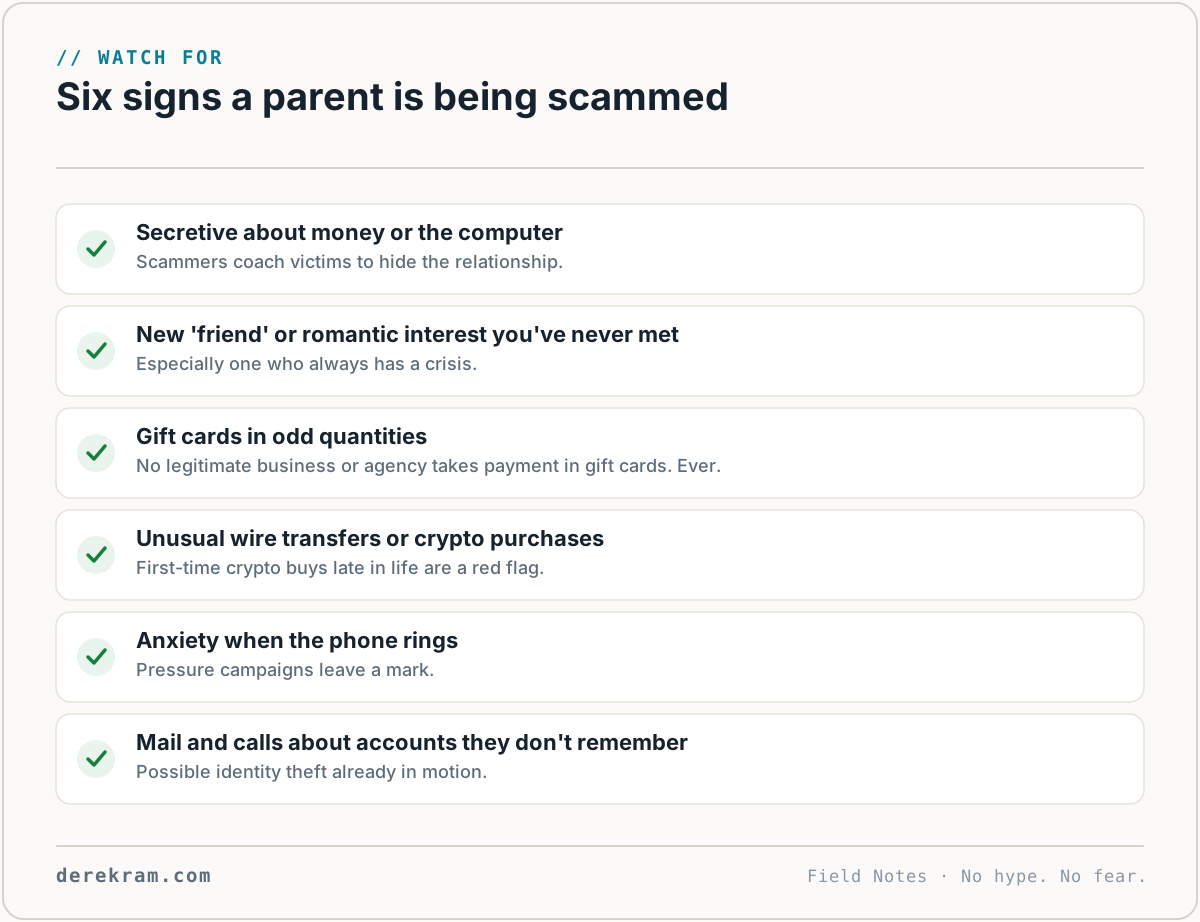
These are subtle. Seniors hide this well.
Unexplained withdrawals or wire transfers. Check their accounts if you have access (with permission). Wire transfers to unfamiliar recipients are the biggest red flag.
New "friends" you've never heard of. Especially online friends who are suddenly very important but conveniently unavailable for video calls.
Secretiveness about finances. If a parent who used to be open about money suddenly gets cagey, something's wrong. Not necessarily a scam, but worth a gentle conversation.
Multiple antivirus or "security" programs installed. A computer packed with "PC Cleaner Pro" and "Super Antivirus 2026" is usually a computer that's been targeted by tech support scams.
Gift card purchases. Scammers love gift cards. They're nearly impossible to recover once spent. If your parent is buying large quantities of iTunes, Google Play, or Amazon gift cards and can't explain why, that's a scam.
They mention a "friend" who needs money. Romance scam victims frame the request as helping someone they care about. Listen for new online relationships that suddenly have financial crises.
How to Have the Conversation (Without Making It Worse)
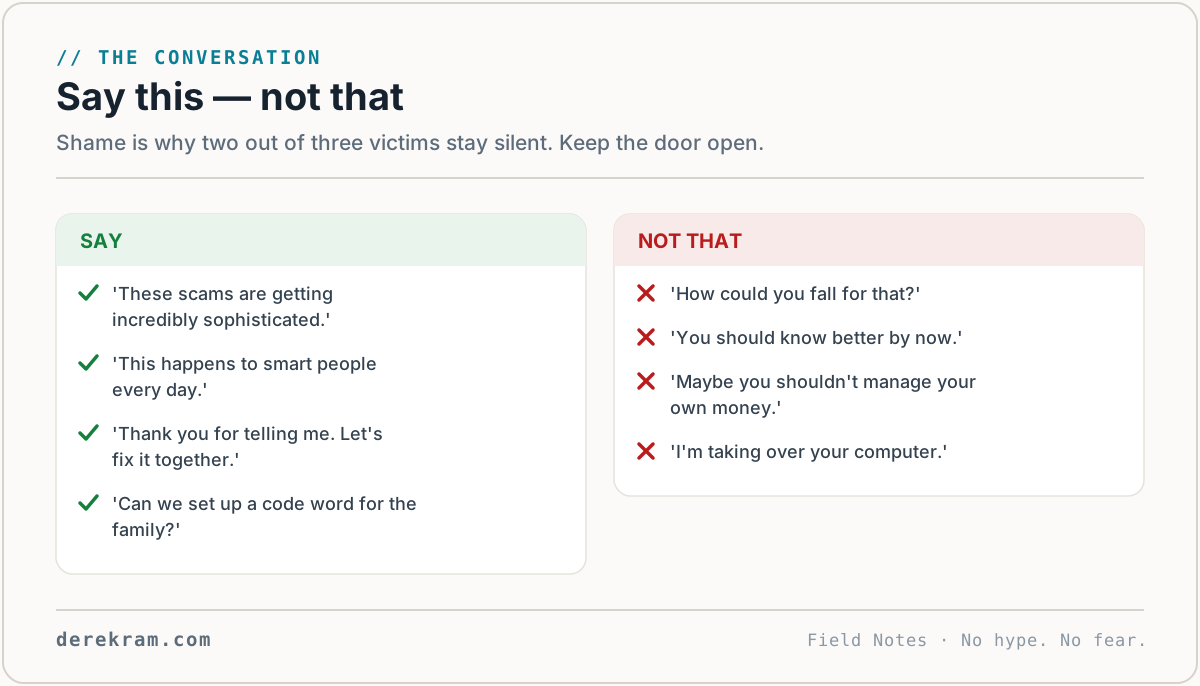
The worst thing you can do is march in and announce they're being scammed and need your help. That triggers shame, defensiveness, and secrecy.
Here's what works better:
1. Make it about you, not them. "I've been reading about these new AI voice clone scams and honestly they scare me. Can we set up a family code word so I know it's really you if something happens?" This makes them your ally, not your project.
2. Share your own security mistakes. "I almost clicked a phishing email last week. It looked exactly like my bank. These things are getting really good." Vulnerability from you invites honesty from them.
3. Offer a "second set of eyes" rather than "taking over." "If you ever get an email or call that feels off, forward it to me. I'll look at it with you. Two people are harder to fool than one." This preserves their autonomy while giving you visibility.
4. Set up practical protections together. "I'm setting up credit freezes for myself — it takes 15 minutes and stops anyone from opening accounts in my name. Want to do it at the same time? We can do it over the phone." Do it with them, not for them.
5. Never judge, never shame. If they tell you they got scammed, your first words should be: "Thank you for telling me. Let's figure this out together." The moment you say "how could you fall for that," they'll never tell you again.
Practical Protections to Set Up
Set up a family code word. I wrote about this in detail. One random phrase. Anyone calling claiming to be family must know it. No exceptions. This kills voice clone scams.
Freeze their credit. All three bureaus + ChexSystems. It's free and prevents new accounts. Do it together so you both understand how to unfreeze when needed.
Set up transaction alerts. Most banks let you set alerts for withdrawals over a certain amount. $500 is a good threshold. If someone wires $4,000 to a scammer, you want to know within minutes, not weeks.
Install an ad blocker on their browser. Many scams start with malicious ads. On Firefox, install uBlock Origin; on Chrome, uBlock Origin Lite (Chrome dropped support for the full version in 2025). Scam ads are a major infection vector.
Put their number on the Do Not Call Registry. donotcall.gov. It won't stop scammers (they ignore the list), but it reduces legitimate telemarketing, making the scam calls easier to spot.
Practice with them. Send them a fake phishing email (use your own words, not an actual scam). Ask them to identify what's suspicious. Praise what they catch. Teach what they miss. Make it a game.
If They've Already Been Scammed
Stop engaging with the scammer. Don't send more money. Don't try to "get it back" — that's a recovery scam waiting to happen.
Preserve evidence: call logs, emails, texts, wire transfer receipts, gift card numbers (yes, they can sometimes be traced).
Report it together: bank (immediately, for possible reversal), FTC (ReportFraud.ftc.gov), FBI (IC3.gov), local police (for documentation, even if they can't investigate).
Then — and this is the hard part — don't take away their independence. The instinct is to take over their finances "for their protection." Don't. Work with them. The goal is protection WITH dignity, not instead of it.
Family Digital Safety Talk Guide — scripts, conversation starters, and a checklist for protecting parents without patronizing them. Free.
Get the 5-Minute Digital Safety Checklist
Four things that make you harder to target. No jargon. No fear. Free.
Get the Checklist →